Handstand variations: what to learn after the handstand
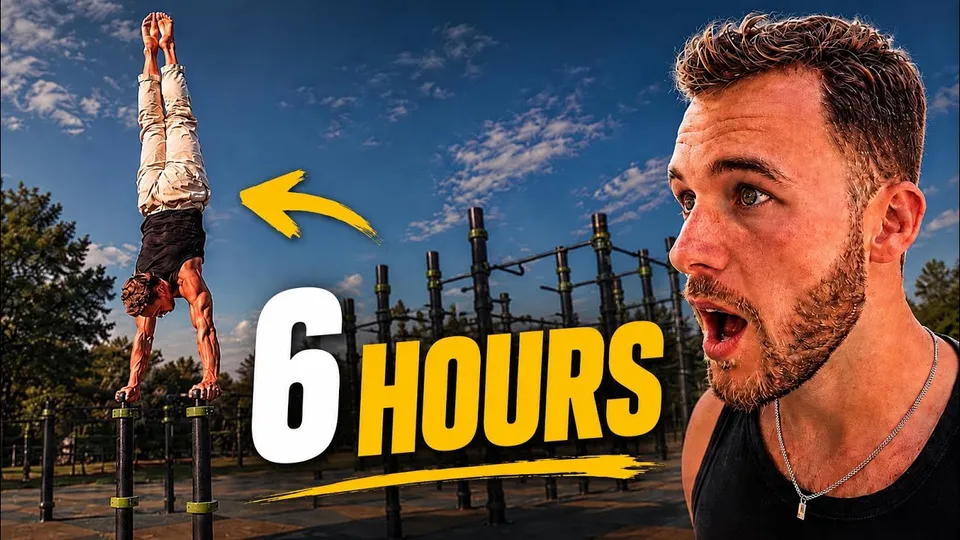
Once you have a handstand, the variations open up: handstand walks, new grips on bars and parallettes, the L-sit to handstand, the press to handstand, the handstand push-up family and the one arm handstand. Some need only a 5-second handstand. Others need 30 seconds with a nearly perfect line.
Everyone tells you to learn the handstand. But what do you do once you have it?
A lot of people see the handstand as the end goal. They think that once you have it, you have it all, and going beyond it is way too hard or even impossible. That is definitely not the case. The handstand is the basic. You need it for the handstand push-up, for the one arm handstand, and for many more skills.
The handstand is my main thing, so I am pretty excited about this one. Here is what you can do after you unlock it.
When have you really unlocked the handstand?
My benchmark: do 10 handstands in a row, and at least 9 of them should last about 8 seconds. Then you have truly unlocked it.
If you held your first one for three seconds, you can handstand, but you have not mastered it. If you are on your hands but cannot stand still, it is a handstand, just not a perfect one. There are levels to the game.
That matters for what comes next:
- Some skills need only about 5 seconds, and you can even get a bit lucky with them.
- Some skills need at least 30 seconds with a nearly perfect line.
As a beginner, I always recommend getting your handstand really consistent for about 30 seconds. As soon as you have that, every variation below is open to you. If you are not there yet, start with how to do a handstand.
Which handstand variations can you learn?
| Variation | What it adds | Handstand you need |
|---|---|---|
| Handstand walk | Moving on your hands | Even a short one, many people walk before they can stand still |
| New grips and surfaces | Balancing on bars instead of the floor | A solid floor handstand |
| L-sit to handstand | An entry that combines several skills | A handstand plus strength |
| Press to handstand | Lifting into the handstand with straight arms | A handstand plus strength and compression |
| Handstand push-up family | Strength from the top position | A consistent handstand |
| One arm handstand | Balance on one hand | About 30 seconds with a nearly perfect line |
How do you do a handstand walk?
Standing still is, in most cases, harder than walking. Some people, like me, first unlock the handstand with a little walk before they can stand perfectly still.
Think about a bicycle. When you sit still on a bike, you fall, because balancing is really difficult. When you are cycling, staying on is way easier. Being in motion makes balance easier.
The handstand walk works the same way:
- If you fall backwards, you set a hand down behind you.
- If you fall forwards, you set a hand down in front of you.
- You are constantly correcting yourself so you do not fall.
Once you understand that, you can steer it. Let yourself fall forward a little and keep putting your hands down, and you are walking. Do the same the other way and you walk backwards.
And like every skill, there are levels to it. You can walk on parallettes with little steps, forwards and backwards, and you can even jump. It does not matter what you call it: moving on your hands is a handstand walk.
Which handstand grips should you try?
The surface you stand on changes the skill.
- Neutral grip on parallettes. Grab the bars and stand on them.
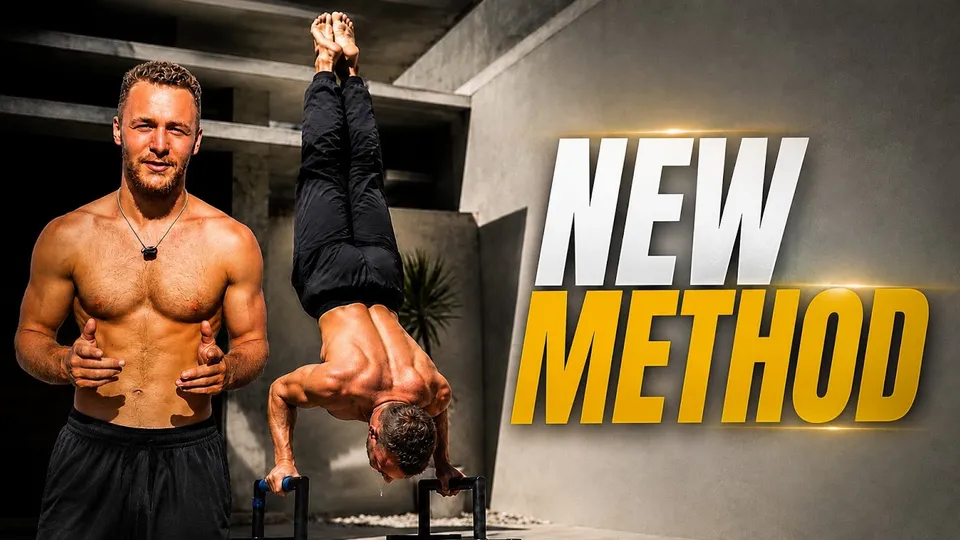
- Pronated grip on a bar. This is called the straight bar handstand.
- Supinated grip. Palms facing the other way, even harder.
- Dragon handstand. Really difficult, but so cool.
- Diamond grip. Hands close together.
- Wide grip. Hands far apart.
- X grip. For the crazy people.
Why balancing on bars feels so different
On the floor you balance with your fingers. On bars you balance by pushing and pulling.
On the floor, if you start falling over, you push your fingers into the ground and that brings you back. On a bar or parallettes your fingers wrap around the bar, so squeezing them does nothing.
Instead, if you fall one way, you push into the bar. If you fall the other way, you pull. Push, pull, push, pull, really fast. That is the whole trick to bar handstands.
How do you do an L-sit to handstand?
It is one move that combines an L-sit, a tuck planche and a handstand push-up, and it ends in a handstand. If you want to go back down the same way, you need the handstand again.
You can make it harder or easier:
- Harder: keep your arms straight the whole way and press up from there.
- Easier: use some momentum. Start in the L-sit, push out and fly up into the handstand.
If the L-sit is still new to you, it is one of the skills in calisthenics skills ranked.
How do you do a press to handstand?
One of my favourites, and I think one of the coolest ways to get into a handstand.
- Put your hands down a little to the side, not straight in front of you.
- Keep your arms straight and your legs straight.
- Lean forward as much as you need.
How much you need to lean depends on you. Flexible people lean less, because their core compression and flexibility lift the legs. Strong people without the flexibility lean more. I am in that second group: I lean, and then I have my handstand.
Two press to handstand drills
These two are kind of controversial, which is exactly why I want to share them.
- The planche lean. It trains the leaning position you need for the press. Lean forward and actively push back into the ground.
- Less range of motion. The bottom part, where your legs leave the ground, is the hardest part. Skip it by starting with your legs already higher. Then lean and press. You can do it in a straddle, or with one leg first and the other following.
There are many progressions in there, and it is a really fun one to train.
What is the handstand push-up family?
Once you have the handstand, you can choose different ways in and different things to do at the top. For example:
- Kick up and do a handstand push-up from there.
- If you are stronger, lean forward and come back up.
- Lower from the handstand into an elbow lever.
- Press from the elbow lever back to the handstand. That is the 90-degree handstand push-up.
In one combination you already do four things: a different entry, a negative to an elbow lever, the way back up and a handstand push-up. If you have the handstand, you can do these freely. You still need to build the strength, but without the handstand it is so frustrating: people kick up, go all the way over and fall.
For the push-up itself, read how to do a handstand push-up.
What about the one arm handstand?
The famous one. It is a whole sport on its own.
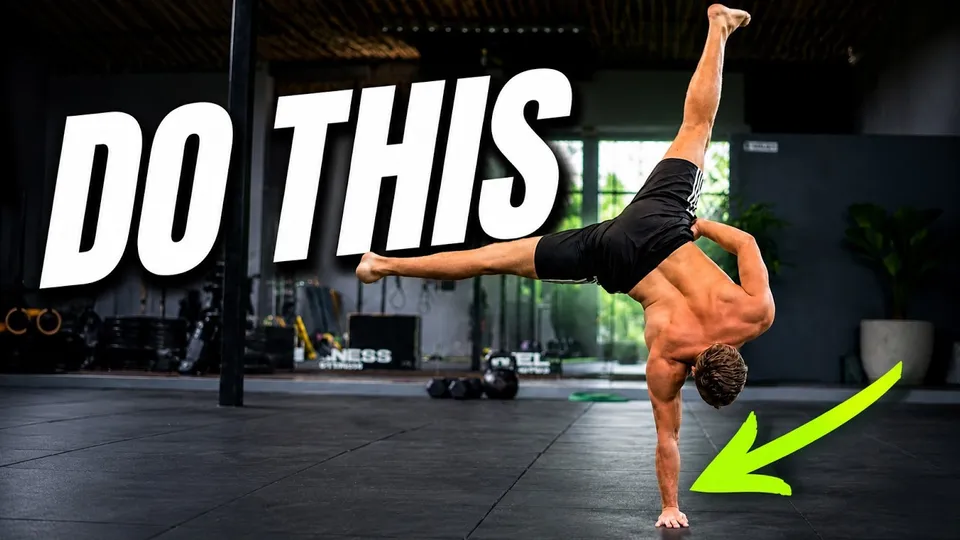
You can hold it full, in a straddle, in a flag, on your other arm, or even do a little hop on it. It is endless. There are people who can hold a one arm handstand for five minutes, and they still work on their form. I have not reached the end level myself.
It is so complex because taking one hand away does not only put all the weight on the other hand. You also start rotating, and instead of only falling forwards or backwards, you can now fall in every direction.
So do not train it by just going for it blindly. Use progressions:
- Start in a straddle. Never start with your legs together.
- Lean and shift your weight over to one hand.
- Hold on five fingers of the other hand and start making corrections.
- Go to three fingers, then two, then one.
- One-finger taps, then slower taps.
- Hold the one arm handstand.
The full breakdown is in how to do a one arm handstand.
Handstand variations FAQ
Is a handstand walk easier than holding a handstand?
For most people, yes. Moving keeps you in balance, like cycling is easier than standing still on a bike. You catch yourself by putting a hand down whenever you start to fall.
How long should you hold a handstand before learning variations?
About 30 seconds, consistently, before the harder ones. A useful test: 10 handstands in a row, with at least 9 lasting about 8 seconds. Some variations, like the walk, need much less.
Do you need flexibility for a press to handstand?
It helps, but you can replace it with strength. Flexible people lean less because of their compression. Less flexible people lean further forward and use more strength.
Why is a handstand on parallettes or a bar harder?
You cannot use your fingers to balance, because they wrap around the bar. Instead, you push into the bar when you fall one way and pull when you fall the other way.
Where do you go from here?
Get your handstand consistent, then pick one variation and train it. There is so much more you can do with a handstand than this list, and I truly recommend everyone to train it.
If you would rather not work out which step to train each session, CaliRealm builds that plan for you and moves you up when you are ready.