How to do a handstand push-up: the two types to train
To do a handstand push-up, first pick which type you are training: straight down with a wider hand position, or diagonal with more range of motion. Train the easier straight-down version first, back to the wall. Build it with feet-elevated pike push-ups, negatives and a bottom hold, at least twice a week, always keeping one or two reps in reserve.
Everyone wants the handstand push-up. It is one of the most iconic skills in calisthenics. But when I watch people train it, most of them train it completely wrong.
Most people do not even know there are two types of handstand push-up. So they train the wrong one, at the wrong time, with the wrong wall setup. This is how I train it, and how I got to 45 in a row.
What are the two types of handstand push-up?
There is the straight-down handstand push-up and the diagonal one. They look similar, but they are not the same exercise.
- Straight down. Your head goes straight down between your hands. Your hands sit a little wider, so the bottom position is wider too.
- Diagonal. Your head travels forward in front of your hands as you lower, and back again as you press. In my opinion it looks way more impressive.
The key difference is range of motion. The wider straight-down version has less of it, and less range of motion is always easier. I can do about 45 straight-down handstand push-ups in a row. Diagonal, with the extra range and the different angle on the shoulders and joints, I can do about 30.
That is a big difference. Both are completely valid, you just train them differently and for different goals.
| Straight down | Diagonal | |
|---|---|---|
| Hand position | A little wider | Normal width |
| Range of motion | Less | More |
| Difficulty | Easier | Harder |
| Wall setup | Back to the wall | Belly to the wall |
| When to train it | First | Once the straight-down version is done |
Should you face the wall or put your back to it?
It depends on the type. Match the wall to the trajectory, or the wall will fight you.
Straight down: back to the wall. Kick up with your back towards the wall, heels resting on it, and do your push-ups. Your head goes straight down, so the wall does not get in the way.
Diagonal: belly to the wall. You need room for your head to travel forward, so your chest faces the wall. Put your feet flat against the wall, walk your hands in a little towards it until you are upside down, then lower diagonally.
Which exercises build the handstand push-up fastest?
Two. The bottom hold, and the feet-elevated pike push-up. Everything else is a variation on these.
1. The handstand bottom hold
This is the most underrated handstand push-up exercise there is.
Every handstand push-up has three positions: the top (the handstand), the middle and the bottom. It does not matter how much range of motion you use, those three are always there.
Because I trained the bottom so much, I now have two resting positions. The handstand at the top is one: I can talk in it, chill in it, play with it. The bottom is the other: I can stay there for about a minute. Only the middle is still hard. That is exactly where you want to be, because the rep only has one hard part left.
How to do it:
- Get into the bottom position of a handstand push-up, with your feet on an elevation.
- Put as little weight on your feet as possible.
- Hold.
Over time you take more and more weight off your feet, until you are strong enough to hold the bottom position on your hands alone.
2. The feet-elevated pike push-up
This makes the handstand push-up easier by letting your feet take some of your weight, while keeping the same trajectory.
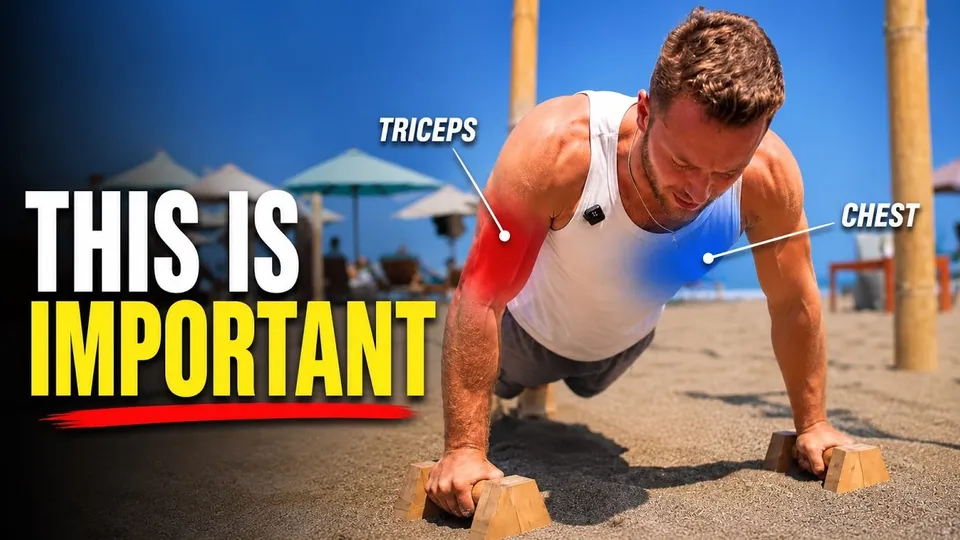
- Put your feet on a box or an elevation at about knee height. If you train on parallettes, stand on the parallettes and use a box of the same knee height.
- Walk into a pike position. Hands wide for the straight-down version, or normal width for the diagonal one.
- Get your hips over your hands, so you are already close to a handstand.
- Look down at the floor, never backwards.
- Lower, hold the bottom for 1 second, and press back up.
Make sure the trajectory is right. If it looks like a handstand push-up and feels like a handstand push-up, you are training the handstand push-up. There are many variations of this on the floor or on parallettes. Play around, but keep that path.
If the full rep is still too hard, do the negative only. Lower yourself slowly, try to hold the bottom, then exit however you can. It is fine if the exit looks messy. You are training it.
How often should you train handstand push-ups?
At least two times a week. That is the minimum. Three or even four sessions a week is much better.
- Never train to failure. Keep one or two reps in reserve on every set. This is strength training, not a test.
- Get your volume in with an easier variation. Pike push-ups, or negative handstand push-ups with your back to the wall. Build strength with the shorter range of motion first.
- Do the bottom hold every session. Getting strong in the bottom position is huge.
If you would rather not work out which variation to do each session, CaliRealm builds that plan for you and moves you up when you are ready. And if you cannot do a clean floor push-up yet, start with how to do a push-up. The handstand push-up is built on it.
When should you train the diagonal handstand push-up?
When you are done with the straight-down version. The diagonal one, with its bigger range of motion, is the next progression, not a separate starting point.
Here is the order I use:
- Pike push-ups, feet on the floor.
- Feet-elevated pike push-ups at knee height, with a 1 second pause at the bottom.
- Handstand bottom holds, taking weight off your feet over time.
- Negative handstand push-ups, back to the wall.
- Straight-down handstand push-ups, back to the wall.
- Diagonal handstand push-ups, belly to the wall.
What comes after the handstand push-up?
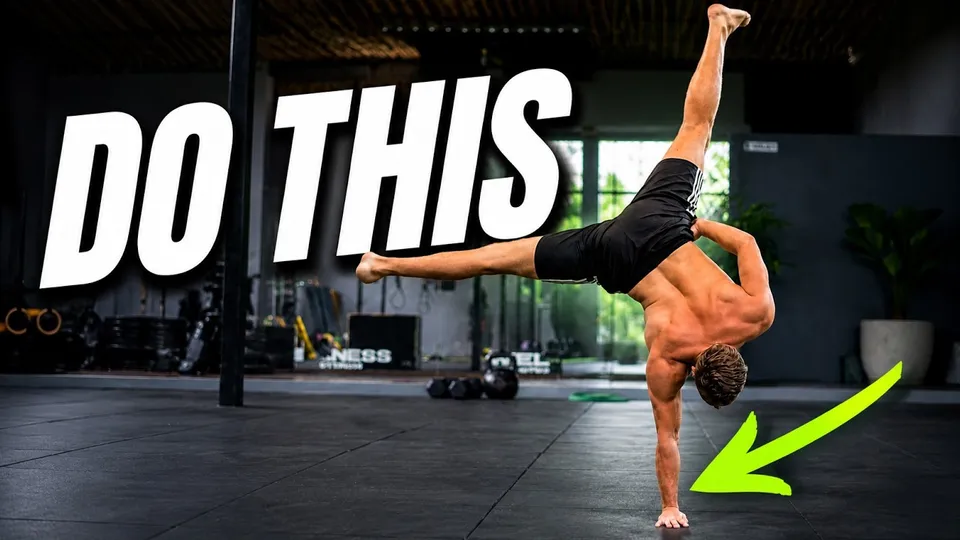
Harder variations. The handstand push-up does not end with doing more handstand push-ups.
One I love is the 90 degree handstand push-up. You lower from the handstand all the way into an elbow lever (elbows locked into your hips, body horizontal), and press back up to the handstand from there.
- Easier version: lock your elbows in, go down to the elbow lever, push back up.
- Progression: do it with your legs in a straddle, which makes it easier. Lower all the way, and press back out.
It is basically a cool-looking handstand push-up, and it starts from the diagonal version.
What are the most common handstand push-up mistakes?
- Not knowing which type you are training. Straight down and diagonal need different setups and different progressions. Pick one.
- Starting with the diagonal version. It has the most range of motion. Train straight down first and treat diagonal as the next step.
- Facing the wrong way on the wall. Straight down goes back to the wall. Diagonal goes belly to the wall, because your head needs room to travel.
- Skipping the bottom hold. If the bottom is a battle, every rep is a battle. Turn it into a resting position.
- Looking backwards in the pike push-up. Look down at the floor and get your hips over your hands.
- Training to failure. Keep one or two reps in reserve. Strength comes from good reps, often, not from grinding.
Handstand push-up FAQ
Do I need a freestanding handstand to do handstand push-ups?
No. You can build the strength with pike push-ups, bottom holds and wall handstand push-ups before you can balance on your own. The wall takes away the balance problem, so the whole session goes into pressing strength. When you want the freestanding version too, start with how to do a handstand.
Is the pike push-up a real handstand push-up progression?
Yes, as long as the trajectory matches. With your feet at knee height and your hips over your hands, it looks and feels like a handstand push-up with part of your weight on your feet. That is why it carries over.
Why is my diagonal handstand push-up so much weaker?
Because it has more range of motion and a different angle on your shoulders. I can do about 45 straight-down reps but only about 30 diagonal ones. A big gap between the two is normal, not a sign that something is wrong.
How long should I hold the bottom position?
Build up over time. Start with some weight on your feet and hold as long as you can with good position, then take weight off week by week. I can now hold the bottom for about a minute, which turns it into a resting position.
How many times a week should I train handstand push-ups?
Two sessions a week is the minimum. Three or four is better, as long as you keep one or two reps in reserve on every set and never train to failure.
Start at the bottom
Put a box at knee height. Pike in, hips over your hands, look down, pause 1 second at the bottom and press. Add a bottom hold every session.
Train straight down first. The diagonal one will be waiting when you are ready.