Calisthenics for beginners: your first workout plan
Start calisthenics with three full-body workouts a week, with a rest day between each. Every session runs in the same order: warm-up, skills (frog stand, planche lean, handstand), legs, then the basics (pull-ups, push-ups, dips, Australian pull-ups) and a little core. Keep it simple for the first weeks: three sets of ten, or four sets of six.
Let's be honest, calisthenics can be overwhelming. You scroll Instagram, you see handstand push-ups and one-arm handstands, and you do not even know where to start. That feeling is normal. I could not do any of it either.
This is everything I wish I knew when I started: the warm-up, the first skills, how to structure your week, and the sets, reps and rest times that actually matter. Nothing more.
How often should a beginner do calisthenics?
Three times a week, full body every time. For example: Monday, rest Tuesday, Wednesday, rest Thursday and Friday, then Saturday.
Do not start with a bro split or push/pull/legs. If you only train pulling once a week and pushing once a week, you get no repetition. You are working out, but you are not repeating the exercises that matter. Repetition is how you get good at a movement, so every session covers everything.
| Day | Training |
|---|---|
| Monday | Full body |
| Tuesday | Rest |
| Wednesday | Full body |
| Thursday | Rest |
| Friday | Rest |
| Saturday | Full body |
| Sunday | Rest |
What does a beginner calisthenics workout look like?
Five blocks, always in the same order. Skills come early, while you are fresh, because they need the most focus.
| Block | What to do | Sets and reps |
|---|---|---|
| 1. Warm-up | Heart rate up, joint rotations, an easy version of your first skill | 5 to 10 minutes |
| 2. Skills | Frog stand, planche lean, handstand leg-up hold | 3 to 5 holds each |
| 3. Legs | Squats, pistol squat negatives | 3 x 10 |
| 4. The basics | Pull-ups, push-ups, Australian pull-ups, dips (or their easier versions) | 3 x 10 or 4 x 6 |
| 5. Core | Hollow body hold, hanging knee raises | 3 sets |
In the first weeks, do not overthink the numbers. Three sets of ten, four sets of six, it really does not matter yet. What matters is that you move, feel your body and show up three times a week.
Nervous about your first session in a park? I filmed the whole first workout in one, with an easier version of every exercise, in my first day in a calisthenics park video.
How should you warm up for calisthenics?
Three steps: get your heart rate up, rotate your joints, then do a specific warm-up for what you are about to train.
- Heart rate up. Jumping jacks, mountain climbers, a short jog around the park. Easy movements, but your breathing gets heavier. This is also you getting mentally ready to train.
- Rotate and stretch. Grab a band and do rotations. Calisthenics is hard on the shoulders, elbows and wrists, so warm those up specifically. You are not trying to get tired, just to move freely.
- Specific warm-up. An easy version of what comes next. Training handstands? Do a few frog stands first and feel your wrists working. Training planche? A light planche lean. I can do about 45 handstand push-ups, so I warm up with a few handstand push-ups. As a beginner, you use the easier variation.
There is a reason the specific part works. Your body recruits small motor units first and big ones later. A short, specific warm-up tires out the small ones, so when the real set comes, the big, strong ones do the work. A good warm-up literally makes you stronger in the session.
Which calisthenics skills should a beginner learn first?
The frog stand and the planche lean. They carry over to more skills in calisthenics than anything else. After those, add the handstand, the hollow body hold, the elbow lever and the L-sit.
| Order | Skill | Why it comes here | Move on when |
|---|---|---|---|
| 1 | Frog stand | Your first time balancing on your hands | You hold it at least 10 seconds, ideally 20 |
| 2 | Planche lean | Teaches straight-arm strength and shoulder blade control | You can lean further without your arms bending |
| 3 | Hollow body hold | The body position in almost every skill | You can hold it with straight legs |
| 4 | Elbow lever | Your whole weight on your wrists, in a hollow body line | You hold it with legs together |
| 5 | L-sit | Pushing your shoulders down while lifting your legs | You hold it with straight legs |
You do not need to finish one before starting the next. Train all five in the same session: frog stand at the start, planche lean after it, L-sit and hollow body at the end. And some will suit you better than others. I could do the frog stand and the L-sit on day one, but the planche lean took me a long time to get with straight arms and my shoulder blades in the right place.
The frog stand
This is my favourite exercise in all of calisthenics. It is the easiest progression towards the handstand, and you are already standing on your hands.
- Squat down, hands flat on the floor, fingers pointing straight forward.
- Put your knees into the small grooves on the back of your upper arms.
- Round your back, squeeze the floor with your fingers and lean forward until your feet get light and come off.
Do not blame yourself if it does not work the first time. Give it a few days, maybe a week. I taught my mom to do this. She was sure she could never do it and that her wrists would hurt. It is mostly a mental one. Everyone can do this.
The harder version puts your knees on top of your elbows, which lifts your hips higher. From there the next steps go to the handstand, all laid out in how to do a handstand.
The planche lean
This is the exercise professionals still do, and beginners should do too, because it is your first lesson in straight-arm strength.
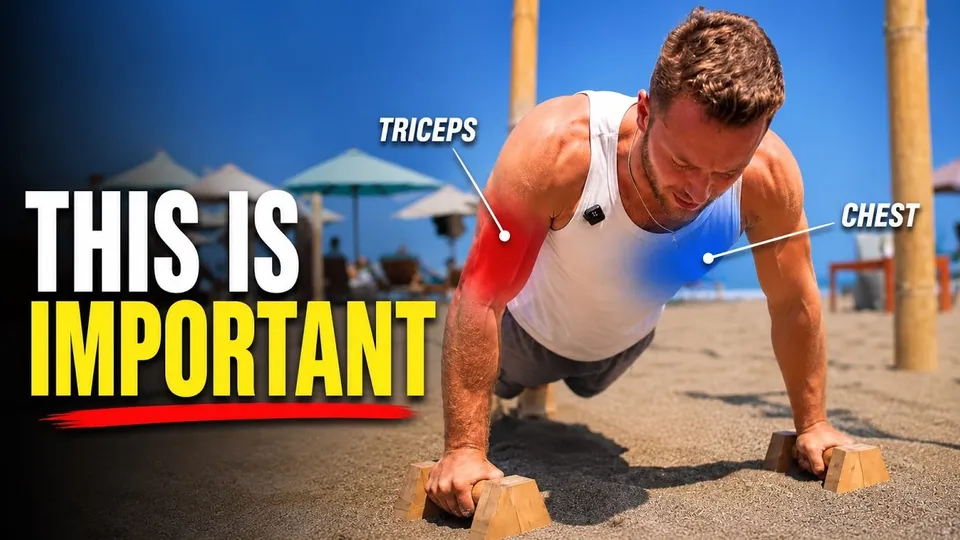
- Get into a push-up position with straight arms.
- Move your shoulders up, then forward (away from you), then down. This is how I learned to control my shoulder blades.
- Round your upper back, squeeze your core, and lean forward.
- Hold for about 12 seconds. Do several sets.
Lean only as far as your level allows. The arms must stay straight. I see strong people from the gym bend their arms the moment they lean. At that point it is not a planche lean any more.
The hollow body hold
This is the position of every static skill in calisthenics. The pull-up, the muscle-up, the planche, the front lever, the back lever, the human flag: all of them are a hollow body with something else added.
- Lie flat on your back and pull your knees to your chest. This is the tuck hollow body hold.
- Lift your shoulders off the ground: crunch your abs and push your shoulder blades forward and apart.
- To make it harder, straighten your legs. This is the full hollow body hold.
Only your lower back may touch the ground. I see a lot of people cheat by lying flat with their legs in the air. That is not the same exercise.
Full straight away is hard, so there are steps in between: straighten your knees a little less, extend one leg at a time, or go into an advanced tuck or a straddle before the full version.
And the good news: the core is overrated in calisthenics. If you can hold a full hollow body, your core is strong enough for a full planche and a full front lever. What holds those up is something else: your front shoulders in the planche, your rear shoulders and lats pushing down in the front lever.
The elbow lever
Here you take the hollow body position and balance it on your elbows. It is one of the coolest-looking skills there is, and you can learn it in a day, maybe a week.
- Grab a low bar or parallettes with an underhand grip, palms facing you, like a chin-up.
- Turn your elbows in, round your back and lean forward.
- Lift your feet off the ground. Bending your legs is fine at this stage. No low bar? Do it on low parallettes the same way, with bent legs, until you are off the ground.
Hold that for at least 10 seconds before you move on. Then bring your legs and body into one straight line, the hollow body.
Film yourself. As a beginner it is really hard to feel where your body is in space, so you will think you are straight when you are not. Watch the video, adjust, try again. For me the cue is: lean forward, chest up, and use my lower back to lift my legs.
Once you have it, there is even a one-arm version. It is in calisthenics skills.
Why I call it the first skill to learn: it is the first time your whole weight sits over your wrists and your hands make the balance corrections. Fall forward, press your fingers. Fall back, press your palms. That is the same job your hands do in the handstand and the planche. I show the progressions step by step in my elbow lever video.
The L-sit
Legs straight out in front, only your hands on the ground or the bars. The key is pushing your shoulders down, away from your ears.
- Start on parallettes. The ground is a lot harder.
- Push your shoulders down and lift your knees up. This is your first step: hold it.
- To make it harder, straighten your legs a little more each time until you are a full L.
You can also train it hanging from a bar. It does not matter where, as long as the shoulders stay down.
On the ground, put your hands flat next to you, not on your fingertips, that is way too hard. Lock your elbows, push your shoulders down, lean forward slightly, and pull your knees as high as you can. This close to the ground you need more core compression: really fold yourself in half.
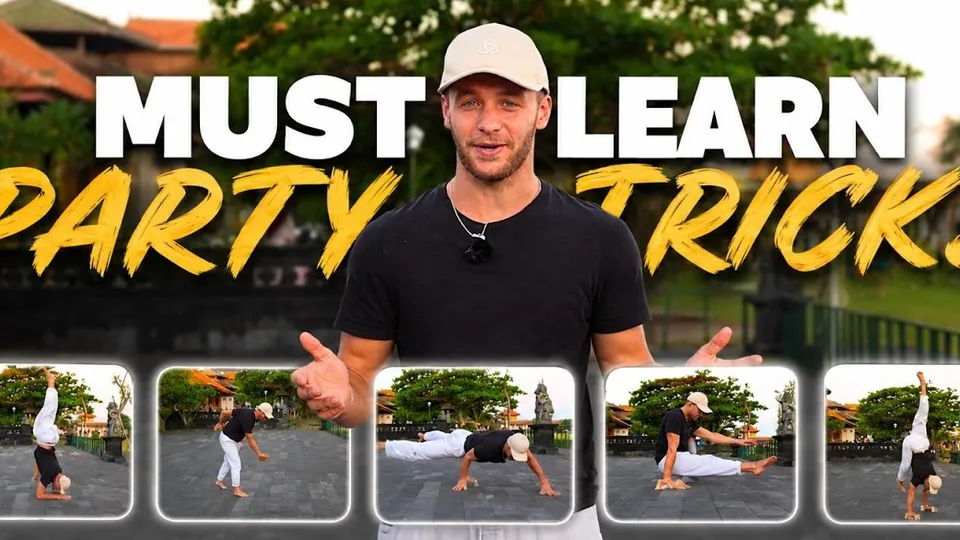
I walk through all five skills, including how to train them together, in this video.
Which strength exercises do beginners need?
The basics: pull-ups, push-ups, dips and Australian pull-ups. They use big muscles at the same time, which builds the raw strength every skill sits on. Between them they cover pulling and pushing, horizontally and vertically.
If you cannot do them yet, use the easier versions:
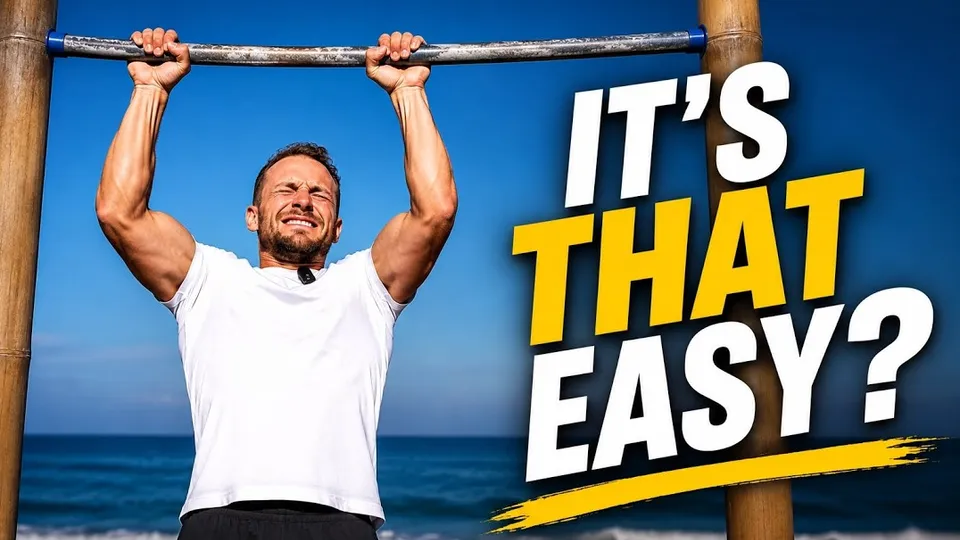
- Pull-ups: negatives (jump or step to the top, lower yourself as slowly as you can) or a resistance band under both feet. Full guide: how to do a pull-up.
- Push-ups: negatives, or push-ups with your hands on something higher. Full guide: how to do a push-up.
- Dips: negatives. Get on top of the bars, lower yourself slowly, jump back up.
Negatives are your best friend as a beginner. It may feel like you did nothing because you never went up. Trust it. Controlling the way down trains the way up.
Should beginners train legs in calisthenics?
Yes. Honestly, I do not train legs any more. At a high level, legs are dead weight: no elite static skill needs them, and in a front lever you want them as light as possible.
But as a beginner, train them. The pistol squat is a skill on its own and a fun one to work towards. Start with squats and pistol squat negatives: lower yourself on one leg as slowly as you can, then stand up however you can.
How many sets and reps should a beginner do?
For the first weeks, three sets of ten or four sets of six is fine. Once you train with a goal, the numbers depend on what you are after:
| Goal | Sets x reps | How hard | Rest |
|---|---|---|---|
| Strength | About 5 x 5 | Stop two reps short of failure | 3 to 5 minutes |
| Muscle growth | About 3 x 10 to 12 | Go to failure | About 2 minutes |
| Endurance | 2 to 3 sets of 15+ | To failure | Short; at 25 reps, pick a harder version |
| Skill holds | Timed holds | Stop 1 to 2 seconds before you would fall out | 3 minutes or more |
For strength, keep two reps in reserve. If you can do ten pull-ups, do eight. I never go to failure. That is probably why I am this skinny, but crazy strong.
These are guidelines, not rules. I do not know how fast your body recovers, and you probably do not either yet. Adjust as you learn.
How do you go from beginner to advanced?
Train four kinds of strength, not just more push-ups and pull-ups. Most people only build one of them, then wonder why someone who started two years after them is already in a straddle planche. I have coached a 100 kilo athlete to a 90 degree handstand push-up in a matter of months. That is what happens when all four are trained.
- Explosiveness. Not how many pull-ups you can do, but how fast. Training fast wakes up your biggest, strongest muscle fibres. Do it at the start of the session while you are fresh: about 7 sets of 2 explosive reps.
- Base strength. Raw force. Weighted dips and pull-ups, about 5 sets of 5. Add weight when it gets easy.
- Endurance. 2 to 3 sets of 15 or more, to failure. Past 25 reps, move to a harder version, for example from band-assisted pull-ups to archer pull-ups.
- Specific strength. Strength in the exact position of the skill. A 200 kilo dip does not mean you can hold a planche. Train the planche lean for the planche, wall negatives for the handstand push-up, and your fingers for the handstand.
Keep the four level. If one is far ahead of the others, stop adding to it and train the weakest one. I explain how to train each of the four in my beginner to advanced video.
What are the most common beginner calisthenics mistakes?
- Jumping to random skills. Trying the planche, the front lever and the muscle-up in week one without any of the foundations. Learn the progressions in order.
- Splitting the week like a gym program. One pull day and one push day a week gives you no repetition. Train full body, three times a week.
- Skipping the warm-up. Especially wrists, elbows and shoulders.
- Bending the arms in the planche lean. Straight arms or it is a different exercise.
- Going to failure when you train for strength. Keep two reps in reserve.
- Cheating the hollow body hold. Only your lower back and bum may touch the floor. Lying flat with your legs in the air is not the same exercise.
- Being scared of the park. Everyone there started without a pull-up. In all the parks I have trained in, the pros and the beginners are friendly, because they all know what this journey takes.
Calisthenics for beginners FAQ
Can I do calisthenics with no equipment?
Mostly, yes. The frog stand, planche lean, push-ups, hollow body hold, squats and handstand work all need only the floor and a wall. For pulling you need a bar, which is where a calisthenics park helps. A pair of parallettes makes the planche lean and the L-sit easier on your wrists.
Is the frog stand the same as crow pose?
Almost. Yoga calls it crow pose, and you see it in pilates and breakdance too. In calisthenics we round the back, point the fingers straight forward and use it as the first step towards the handstand, so the focus is on balancing with your fingers, not only on holding the shape.
I cannot do a single pull-up. Can I still start?
Yes. Everyone starts there. Use negatives and resistance bands, and add Australian pull-ups with your feet on the ground. You can combine them, too: band-assisted negatives. The step-by-step version is in how to do a pull-up.
What should I do on my first day in a calisthenics park?
Warm up, try the frog stand and a light planche lean, then do negatives on the pull-up bar, push-ups at a level you can manage and a few dip negatives. Finish with hanging knee raises or a hollow body hold. Then take two rest days.
Do I need a coach to start calisthenics?
Not to start. In the beginning, moving and showing up matters most. Once you are chasing a specific skill, a coach saves you a lot of time, because the mistakes that hold you back are hard to see from the inside.
Your first week
Monday, Wednesday, Saturday. Warm up, frog stand, planche lean, squats, pull-up and push-up negatives, a hollow body hold. Three sets of ten, or four of six.
If you want the plan built around your level, CaliRealm asks a few questions and puts together your sessions for you, then moves you up when you are ready. When the basics are in, the next goal is waiting: how to do a muscle-up.